Quick answer
Ozempic, Zepbound and Every Other GLP-1 Get a Vision-Loss Warning: The Odds and the Symptoms
On Nov. 9, 2026, the FDA told the makers of all GLP-1 drugs to warn about NAION, a rare cause of sudden vision loss in one eye. Here are the 12 brands on its list, what the risk numbers mean in plain odds, and what to do.

CheckedNov. 92026
The short answer
The FDA is making the companies behind every GLP-1 drug, including Ozempic, Wegovy, Mounjaro and Zepbound, add a warning about NAION to their labels. It announced the change on Nov. 9, 2026.
NAION is a rare condition that causes sudden, painless vision loss in one eye, and the loss can be permanent. In the FDA’s review of 126 trials, it showed up in 6.4 per 100,000 patient-years on a GLP-1, against 3.8 on a placebo or another diabetes drug.
The FDA isn’t pulling these drugs. Its advice: know the symptoms, and call your health care provider right away if vision in one eye suddenly dims, blurs or goes patchy.
General information, not medical advice. Your doctor or pharmacist can tell you what applies to you.
At a glance
- Announced
- Nov. 9, 2026, in an FDA Drug Safety Communication
- Drugs covered
- Every GLP-1 drug: Ozempic, Wegovy, Rybelsus, Mounjaro, Zepbound, Victoza, Saxenda, Trulicity, Xultophy, Soliqua, Foundayo and generic exenatide
- The condition
- NAION (non-arteritic anterior ischemic optic neuropathy): sudden, painless vision loss in one eye, sometimes permanent
- How rare
- 6.4 cases per 100,000 patient-years on a GLP-1 vs. 3.8 on a placebo or another diabetes drug, in 126 trials
- Symptoms
- Sudden vision loss in one eye, often on waking; blind spots or tunnel vision; colors that look off; blurry or hazy spots
- What to do
- Call your health care provider right away if you notice any of them
- Report a problem
- FDA MedWatch online, or call 1-800-332-1088 for a form
- Last checked
- Monday, Nov. 9, 2026, against the sources at the end of this page
Which drugs get the warning
All of them. The FDA is requiring the company behind every approved GLP-1 receptor agonist to add NAION to the Warnings and Precautions section of the label, the part your doctor and pharmacist go by.
Here’s the FDA’s own list, with the year each was approved.
| Brand | Generic name | FDA approval | Note |
|---|---|---|---|
| Byetta | exenatide | 2005 | Brand withdrawn in 2025, not for safety or effectiveness; only generic exenatide is sold |
| Victoza | liraglutide | 2010 | |
| Trulicity | dulaglutide | 2014 | |
| Saxenda | liraglutide | 2014 | |
| Xultophy | liraglutide + insulin degludec | 2016 | Combined with an insulin |
| Soliqua | lixisenatide + insulin glargine | 2016 | Combined with an insulin |
| Ozempic | semaglutide | 2017 | |
| Rybelsus | semaglutide | 2019 | |
| Wegovy | semaglutide | 2021 | Weekly pens and a once-daily pill |
| Mounjaro | tirzepatide | 2022 | Also acts on a second hormone, GIP |
| Zepbound | tirzepatide | 2023 | Also acts on a second hormone, GIP |
| Foundayo | orforglipron | 2026 | The newest on the list |
Compounded semaglutide and tirzepatide aren’t on the list. They aren’t FDA-approved, so there’s no FDA label to change, and the FDA’s notice doesn’t mention them.
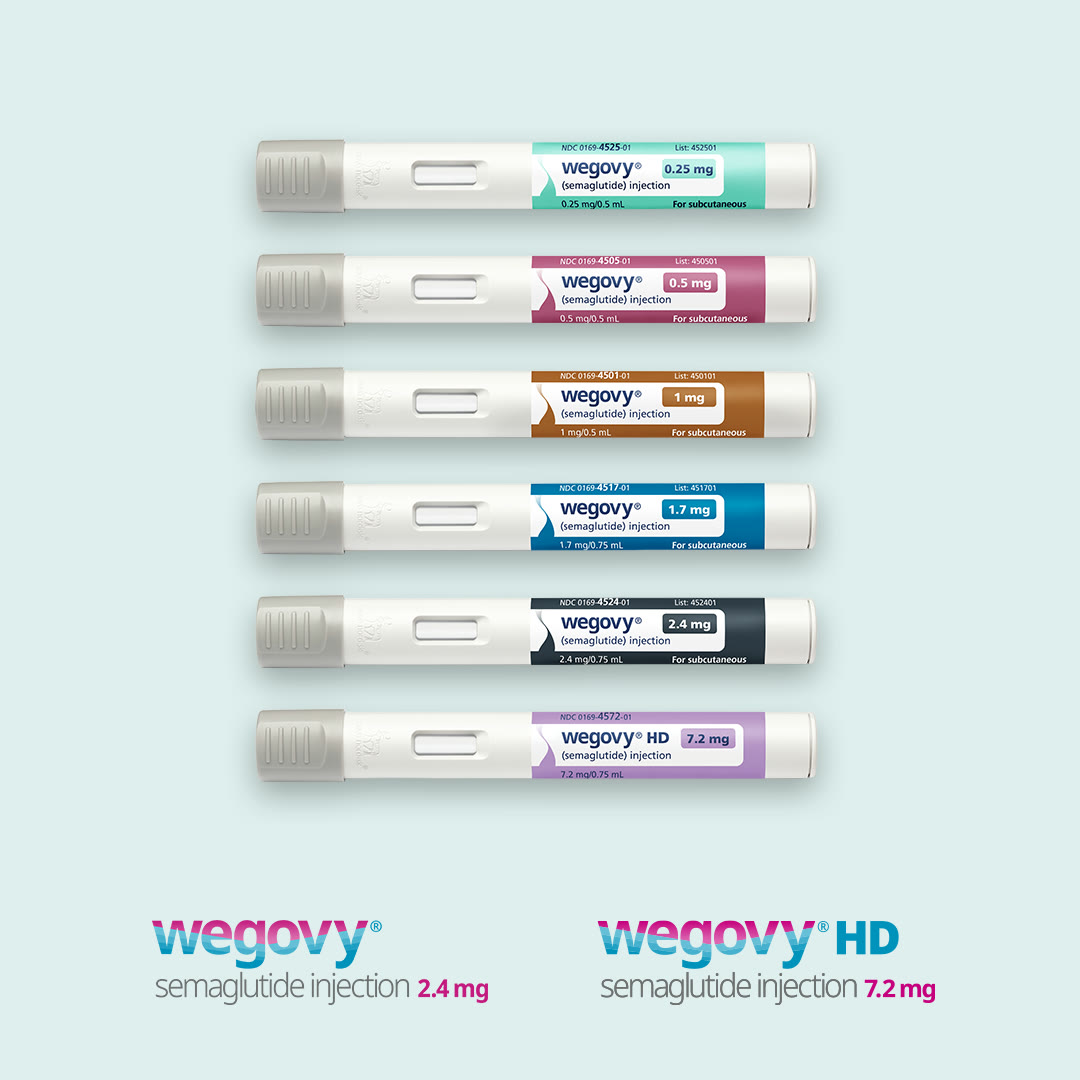
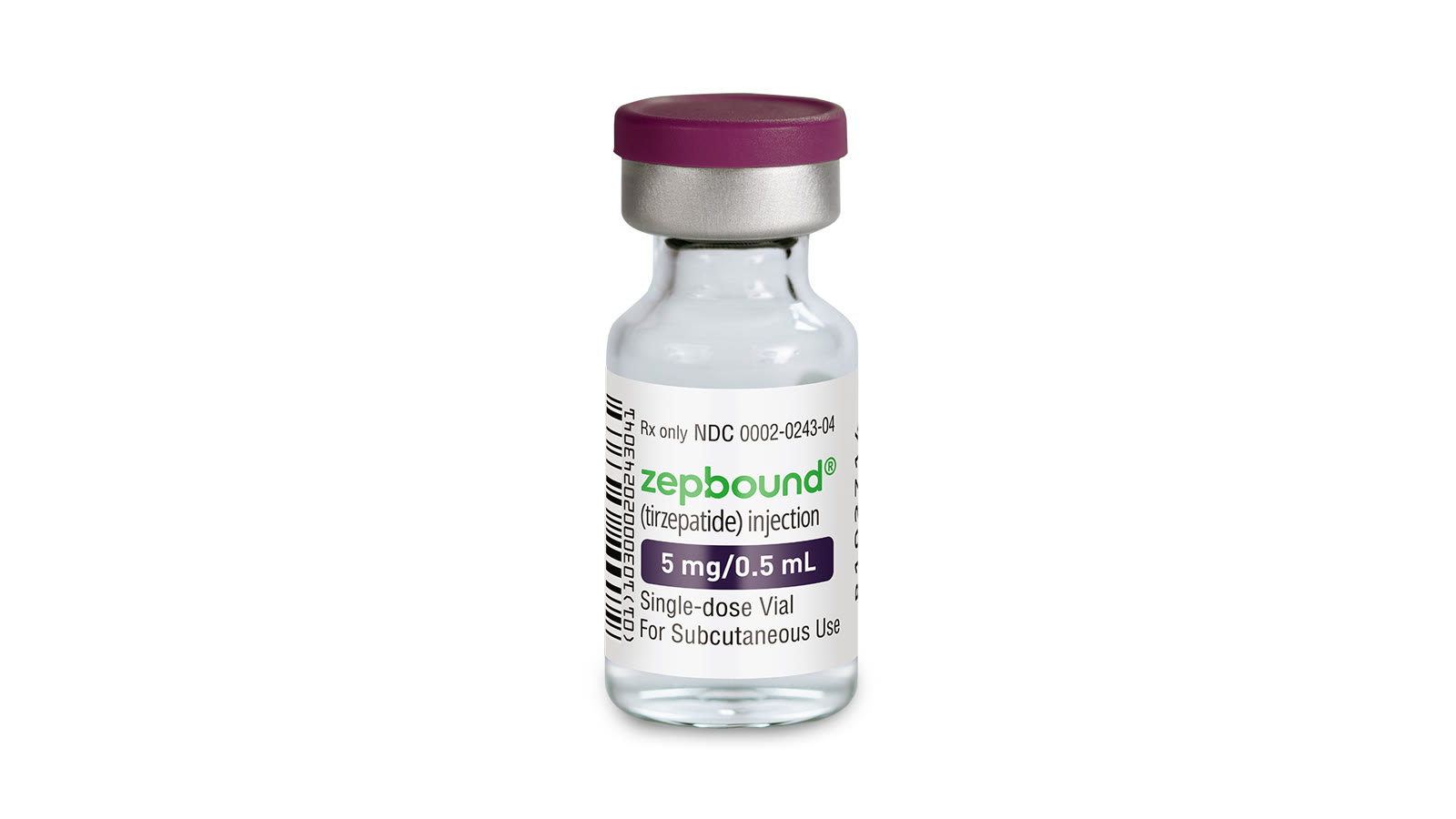
Some of the drugs getting the warning
3 photos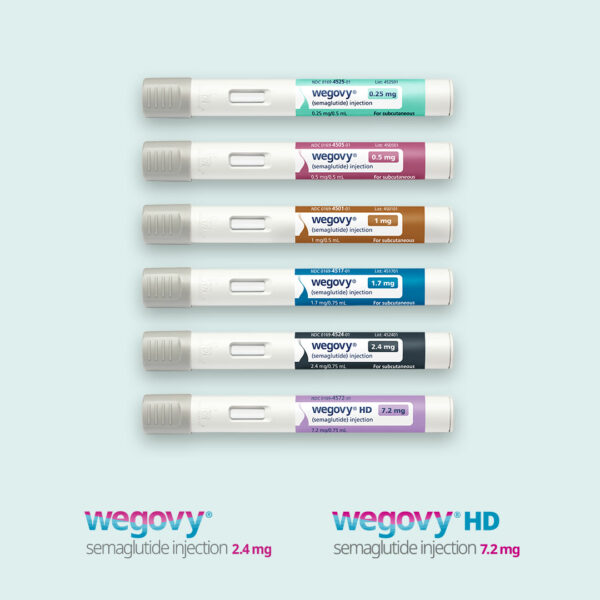
Wegovy and Wegovy HD pens (semaglutide) Photo: Novo Nordisk
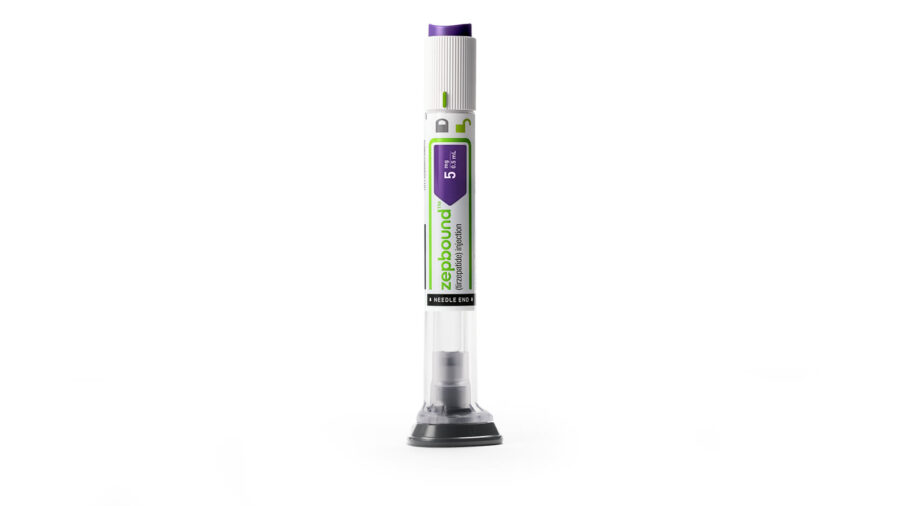
Zepbound autoinjector (tirzepatide) Photo: Eli Lilly and Company
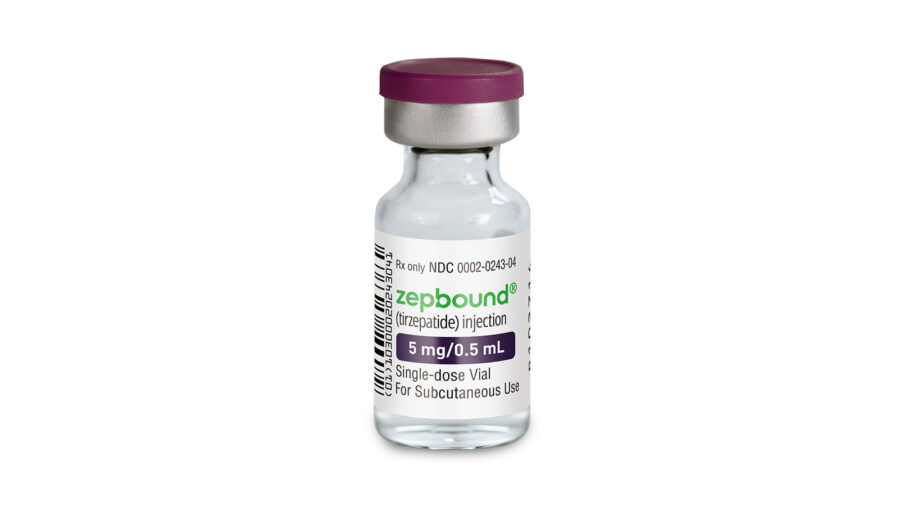
Zepbound single-dose vial (tirzepatide) Photo: Eli Lilly and Company
How likely is it?
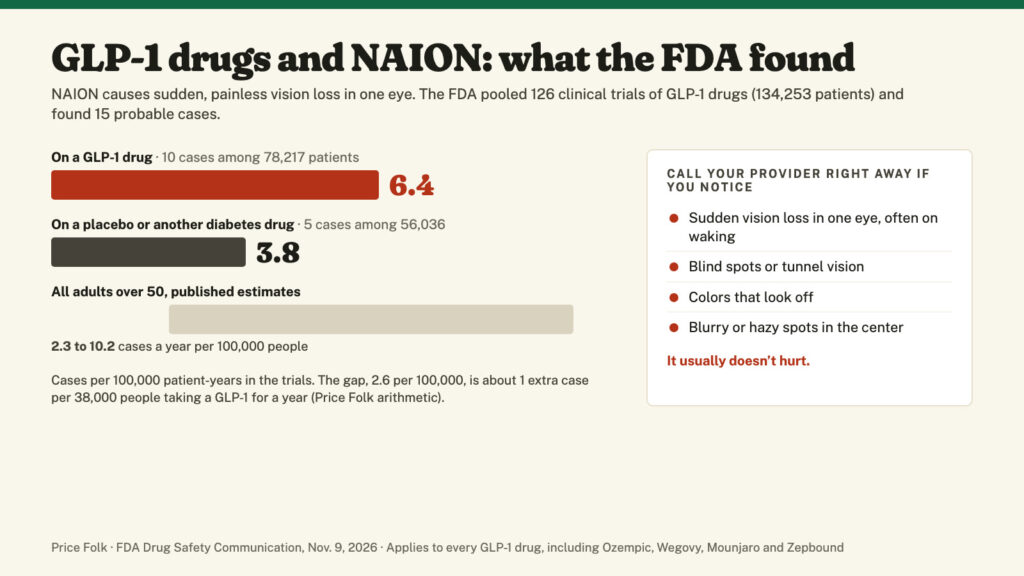
Rare. The FDA pooled 126 clinical trials of GLP-1 drugs with 134,253 patients and found 15 probable NAION cases: 10 among people on a GLP-1 and 5 among people on a placebo.
Adjusted for how long people stayed in the trials, that’s 6.4 cases per 100,000 patient-years on a GLP-1, against 3.8 for people on a placebo or a different diabetes drug.
In plain odds (our arithmetic): the gap is 2.6 cases per 100,000. That’s about 1 extra case for every 38,000 people who take a GLP-1 for a year.
For scale, the FDA cites published estimates of 2.3 to 10.2 cases a year per 100,000 among all adults over 50.
Real-world records tell a murkier story
The FDA also studied insurance records of adults with type 2 diabetes who started a diabetes drug between 2019 and 2024. NAION was more common across that whole group, 26 to 32 cases per 100,000 patient-years, since diabetes itself is a risk factor.
There, GLP-1 users had about the same rate as people starting an SGLT-2 inhibitor, and a higher rate than people starting a DPP-4 inhibitor.
The most rigorous published studies found a higher risk in people with type 2 diabetes who started a GLP-1 than in those starting either of the other two kinds of drug. The FDA calls that generally consistent with its own results.
What the FDA didn’t find is how the drugs might cause it. The animal data showed no mechanism.
The symptoms to watch for
NAION usually strikes one eye and doesn’t hurt, which makes it easy to shrug off. The FDA lists these signs:
- Sudden vision loss in one eye, often noticed when you wake up
- Blurred or missing patches, like blind spots or tunnel vision
- Colors that look off
- Less sharp central vision, such as blurry or hazy spots
If you notice any of them, call your health care provider right away. Doctors are told to send suspected cases promptly to an ophthalmologist.
Should you stop taking it?
The FDA doesn’t tell people to stop. Its advice to patients is to know the symptoms and report them fast.
If you’ve already had NAION, talk with your provider about whether to keep taking a GLP-1. The FDA tells doctors to consider stopping the drug in someone who develops NAION, unless the benefits clearly outweigh the risk. Having it in one eye raises the risk in the other.
Some people are more prone to NAION to begin with. The FDA names smoking, diabetes, high blood pressure, sleep apnea, anemia and kidney disease as possible risk factors.
Why the FDA acted now
In July 2024, a study in JAMA Ophthalmology linked semaglutide to NAION. The FDA saw limits in that study but decided to dig further: clinical trials, animal data, adverse-event reports and observational studies.
Its conclusion is a potential increased risk of rare NAION. Cases have been reported with every GLP-1 on the market, so the warning goes on the whole class rather than drug by drug.
 2:16
How to report a problem
You or your doctor can tell the FDA through MedWatch, its online reporting form, or call 1-800-332-1088 to get a form by mail.
How we figured the odds
The rates are the FDA’s. The “1 in 38,000” is ours: 6.4 minus 3.8 is 2.6 cases per 100,000 patient-years, and 100,000 divided by 2.6 is about 38,000. A patient-year is one person on the drug for one year, so it’s a yearly figure, not a lifetime one.
What we don't know yet
- When the new labels will show up. The FDA’s notice doesn’t give the companies a deadline.
- The exact wording each label will use.
- Whether the risk differs by drug or by dose. The FDA analyzed the drugs as one class and didn’t break it out.
When any of this is confirmed, it goes into the page and the update history below.
Questions people ask
Does Ozempic cause vision loss?
The FDA says GLP-1 drugs, Ozempic included, carry a potential increased risk of NAION, a rare condition that causes sudden, painless vision loss in one eye, sometimes permanent. In 126 trials it found 6.4 cases per 100,000 patient-years on GLP-1s against 3.8 on a placebo or another diabetes drug. It hasn’t found how the drugs would cause it.
Which GLP-1 drugs have the new vision warning?
All of them. The FDA’s list: Ozempic, Wegovy and Rybelsus (semaglutide); Mounjaro and Zepbound (tirzepatide); Victoza and Saxenda (liraglutide); Trulicity (dulaglutide); Xultophy and Soliqua (combined with insulin); Foundayo (orforglipron); and generic exenatide, sold before as Byetta.
What is NAION?
Non-arteritic anterior ischemic optic neuropathy: reduced blood flow to the front of the optic nerve that causes sudden, painless vision loss in one eye. It can be permanent. Its cause isn’t fully understood, and having it in one eye raises the risk in the other.
What are the symptoms to watch for on Zepbound or Wegovy?
Sudden vision loss in one eye, often noticed on waking; blurred or missing areas such as blind spots or tunnel vision; colors that look off; and blurry or hazy spots in the center. Call your health care provider right away if you notice any of them.
Should I stop taking my GLP-1 because of the eye warning?
The FDA doesn’t tell people to stop. It says to know the symptoms and report them quickly. If you’ve had NAION, talk with your provider about whether to continue; the FDA tells doctors to consider stopping the drug unless the benefits clearly outweigh the risk.
Does the warning apply to compounded semaglutide?
The FDA’s notice covers approved GLP-1 drugs and doesn’t mention compounded versions, which aren’t FDA-approved and have no FDA label to change.