Comparison
Ice Melt Compared: How Cold Each One Works, the Price Per Pound, and What It Does to Concrete and Pets
Six bags and jugs from 21 cents to $1.25 a pound, with the temperature each one stops working, what the makers say about concrete, pets and roofs, and why the EPA is dropping its “Safer Choice” label for ice melt.

CheckedNov. 112026
The short answer
For most driveways, plain rock salt is the cheapest choice: 21 cents a pound in a 50-pound bag at Tractor Supply. The catch is that it only works down to about 5°F.
Colder than that, you need calcium chloride, which the labels rate down to −25°F, or a blend with magnesium chloride. They cost three to five times as much per pound.
Any ice melt can hurt concrete. The makers say not to use it on concrete less than a year old, or on stamped, cracked or flaking concrete, brick or stone. And no ice melt is safe for pets in large amounts; the EPA is dropping its “Safer Choice” label for ice melt for that reason.
At a glance
- Cheapest per pound
- Rock salt, 21¢ a pound (50 lb. for $10.49); works to 5°F
- Coldest
- Calcium chloride, rated to −25°F; 66¢ to $1.00 a pound
- Pet-friendly label
- Safe Step Sure Paws, $1.25 a pound, to −15°F; the maker says “gentler,” not harmless
- New concrete
- Don’t use any ice melt on concrete less than a year old, the makers say
- Roof
- Not for roofs or gutters: it can corrode nails and pit aluminum
- Prices
- Tractor Supply online, checked Nov. 11, 2026; they vary by store
- Last checked
- Wednesday, Nov. 11, 2026, against the sources at the end of this page
The six, side by side
We picked six ice melts from Tractor Supply, a national farm-and-home chain that posts its prices online. They cover the main types: plain rock salt, blends, calcium chloride and a “pet-friendly” jug.
The number that matters most is the lowest temperature on the label. Below it, the product stops melting and turns to slush that freezes again.
Cheapest per pound
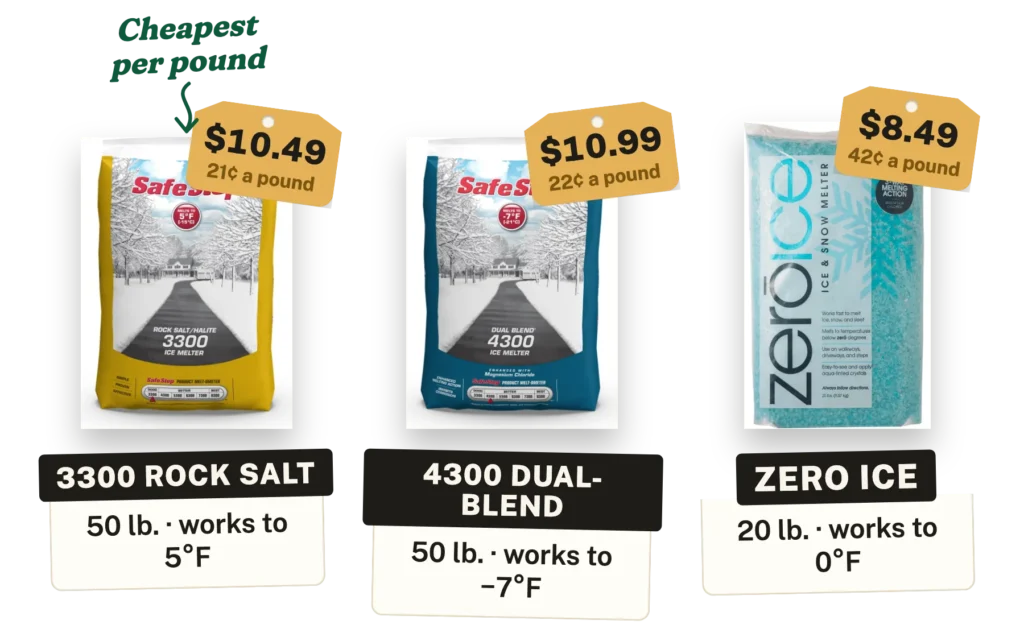
Rock salt (sodium chloride) is the bargain: $10.49 for 50 pounds, or 21 cents a pound. It works down to about 5°F.
For 50 cents more, the 4300 Dual-Blend adds magnesium chloride and a corrosion inhibitor and works to −7°F. At 22 cents a pound, it’s the better buy if you get a few nights below zero.
For deep cold, and for paws
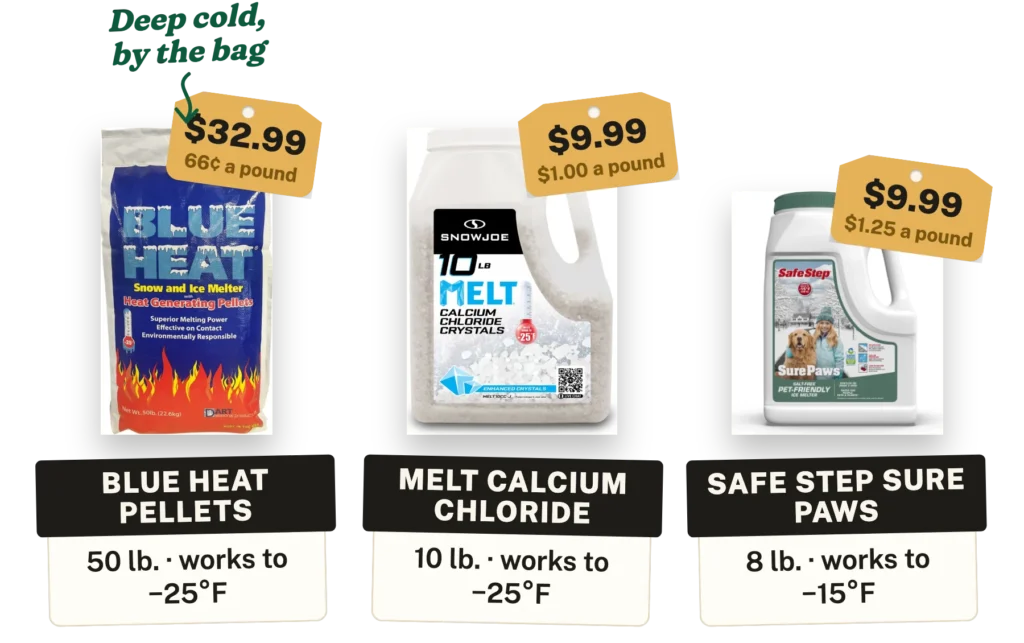
Calcium chloride is what the makers recommend for extreme cold. Compass Minerals, which makes Safe Step, calls it “the best choice” down to −25°F. By the 50-pound bag, Blue Heat comes to 66 cents a pound; the 10-pound jug of Melt crystals is $1.00.
Safe Step Sure Paws is the priciest, at $1.25 a pound. It’s salt-free magnesium chloride, rated to −15°F, and you use much less of it: a quarter cup per square yard, against a full cup of rock salt.
What ice melt does to concrete
The makers put the blame on water that melts, soaks into the surface and freezes again.
“All ice melters have the potential to accelerate the freeze-thaw cycle, a natural enemy of concrete,” Compass Minerals says. Its rules for every Safe Step product:
- Only on good concrete: air-entrained concrete made for cold climates, more than one year old.
- Never on: concrete less than a year old, exposed aggregate, precast, stamped, pre-stressed, chipped, cracked, spalled or weathered concrete; or stone, brick, mortar joints or wood.
- Shovel the slush right away. Melted water left sitting is what refreezes in the surface.
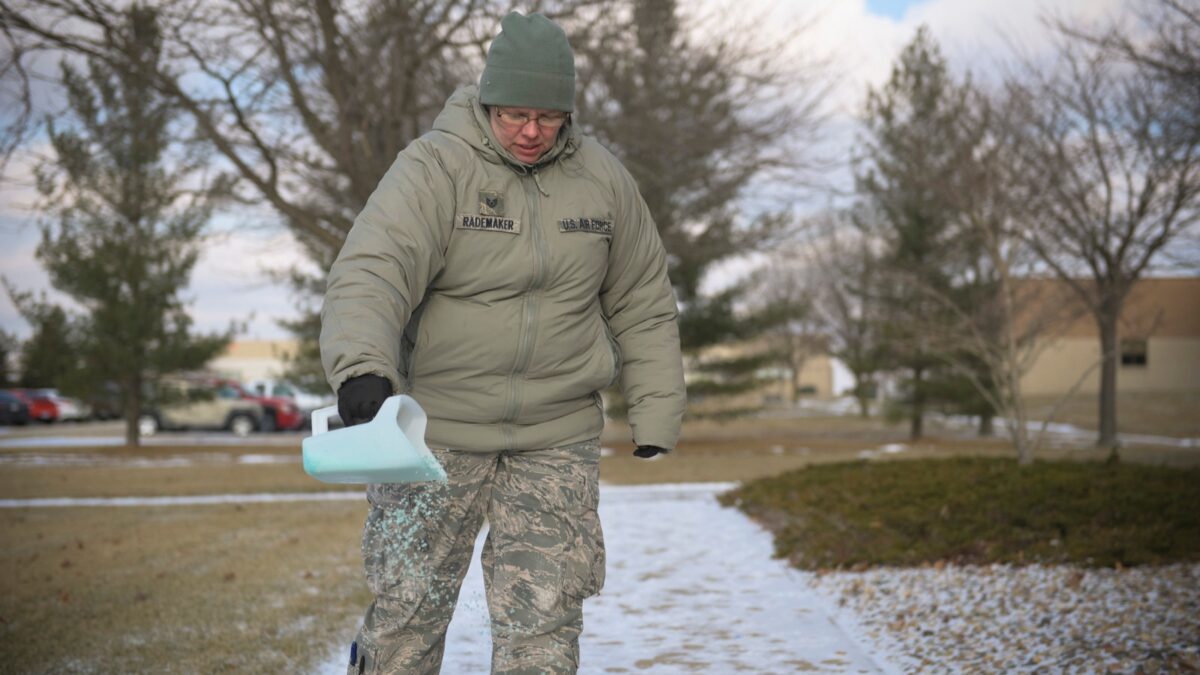
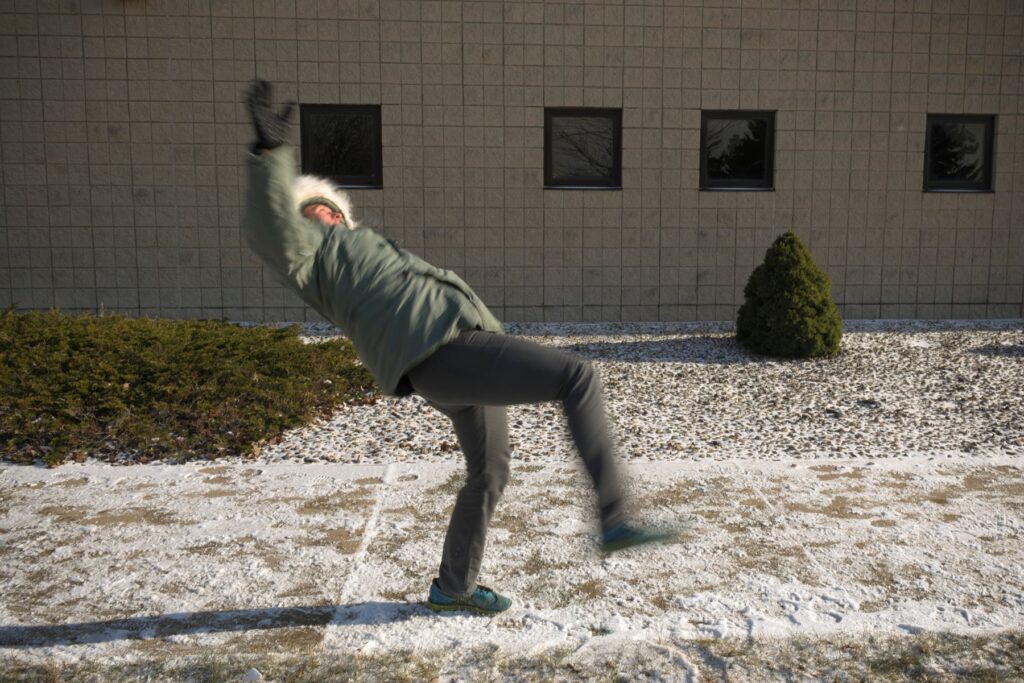
If your driveway is already flaking or cracked, that’s exactly the surface the label says to keep ice melt off. Traction cleats over your shoes help on ice, the Illinois Air National Guard’s safety office says; the concrete itself is worth a look before next winter.
Pets and plants
“Ice melters in excessive amounts can have adverse effects on pets,” Compass Minerals says. It names magnesium chloride and potassium sulfate as the ingredients known to be safer for people, pets and plants. That’s why Sure Paws is built on magnesium chloride.
“Pet-friendly” on a bag is the maker’s claim. Until now, some products could back it with the EPA’s Safer Choice label. Not for long: the EPA says it will no longer certify ice melt, because overuse “can be problematic for the environment and for pets.” Makers have until February 2027 to drop the label from newly made bags.
The EPA’s advice, for any brand, is to follow the label. Compass Minerals adds: spread it evenly, and avoid piling or overspreading.
Not on the roof
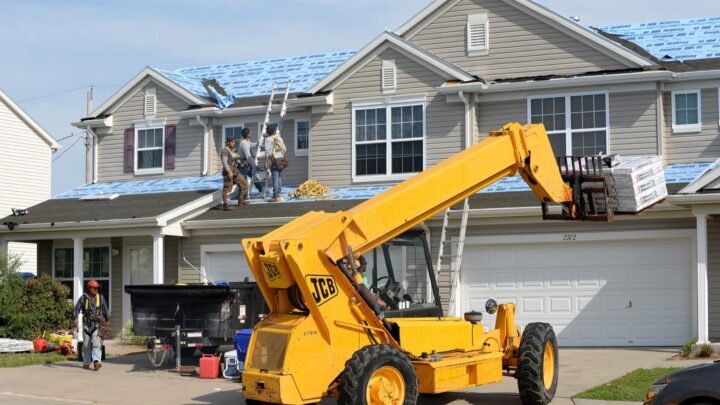
Ice on the roof edge isn’t a job for the driveway bag. Compass Minerals says ice melt can damage roofing materials and corrode roofing nails, pit aluminum gutters and downspouts, and kill plants where the runoff lands.
How much to use, and when
- Before the snow: spread it as the storm starts, so ice can’t bond to the pavement.
- Freezing rain and sleet: put it down early, before ice builds up.
- After a big storm: shovel first, then spread on what’s left.
- Spread it thin and even. Piles waste product and do the most damage.
How we figured the price per pound
We divided each online price at Tractor Supply on Nov. 11, 2026, by the weight of the bag or jug, and rounded to the cent. Prices are before tax and can differ by store; the site showed them for its Franklin, Tenn., store. The temperatures and ingredients are the ones on each product page.
Watch
 2:08
Six ice melts, per pound
6 on the list · status updates itself from each offer's dates
| Ice melt | What’s in it | Works down to | Price | Pounds | Per pound |
|---|---|---|---|---|---|
| 3300 Rock Salt Ice Melter (official page, opens in a new tab) |
100% rock salt (sodium chloride)1 cup per square yard, per the product page. |
5°F |
$10.4950 lb. bag; brand may vary by store |
50 |
$0.21Lowest on this list |
| 4300 Dual-Blend Ice Melter (official page, opens in a new tab) |
Rock salt with magnesium chloride and a corrosion inhibitorThe maker calls it gentler on concrete and metal than plain salt. |
−7°F |
$10.9950 lb. bag; brand may vary by store |
50 |
$0.22 |
| Howard Johnson’s Zero Ice (official page, opens in a new tab) |
Magnesium chloride, potassium chloride and sodium chlorideOne bag covers 30 square yards, per the product page. |
0°F |
$8.4920 lb. bag |
20 |
$0.42 |
| Blue Heat Ice Melt Pellets (official page, opens in a new tab) |
Calcium chloride pellets, tinted blue so you can see where you’ve spreadThe listing says it “does not chemically attack properly cured concrete.” |
−25°F |
$32.9950 lb. bag, listed under Snow Joe |
50 |
$0.66 |
| Melt Calcium Chloride Crystals (official page, opens in a new tab) |
Calcium chloride crystals (Snow Joe) |
−25°F |
$9.9910 lb. jug |
10 |
$1 |
| Safe Step Sure Paws (official page, opens in a new tab) |
Salt-free magnesium chloride pellets, sold as pet-friendlyA quarter cup (2 oz.) per square yard, per the product page. |
−15°F |
$9.998 lb. jug |
8 |
$1.25 |
Nothing in this view right now.
What we don't know yet
- Prices at Home Depot, Lowe’s and Walmart. Their sites didn’t open for us, so this page uses one national retailer’s online prices.
- Whether bags with the EPA’s Safer Choice label will stay on shelves after February 2027. The EPA’s deadline covers newly made products.
When any of this is confirmed, it goes into the page and the update history below.
Questions people ask
Is ice melt safe for concrete?
On good, air-entrained concrete that’s more than a year old, makers say it’s fine if you shovel the slush right away. They say not to use any ice melt on concrete less than a year old, or on stamped, cracked, chipped or flaking concrete, brick, stone or mortar.
Is ice melt safe for pets?
Not in large amounts. Compass Minerals, which makes Safe Step, says magnesium chloride and potassium sulfate are safer for pets than plain salt, and sells a salt-free “pet-friendly” jug. The EPA is ending its Safer Choice label for ice melt because overuse can harm pets and the environment.
What’s the difference between ice melt and rock salt?
Rock salt is one kind of ice melt: plain sodium chloride. It’s the cheapest, about 21 cents a pound, but works only down to about 5°F. Other ice melts use calcium chloride or magnesium chloride, alone or in blends, to work at colder temperatures.
What ice melt works below zero?
Calcium chloride. The labels on the calcium chloride products we checked say they work down to −25°F. A rock salt and magnesium chloride blend is rated to −7°F.
Can you put ice melt on a roof?
No. Compass Minerals says ice melt can damage roofing materials, corrode roofing nails and pit aluminum gutters and downspouts.
How much ice melt do I need?
Follow the label. For plain rock salt and the dual blend we checked, it’s about 1 cup per square yard; for Safe Step Sure Paws, a quarter cup. Spread it thin and even, and shovel the slush.