Quick answer
Frozen Pipes: The Temperature That Matters, How to Thaw One, and When Insurance Pays for a Burst Pipe
What the Red Cross and the University of Illinois say to do before a cold night and after a pipe freezes, what state insurance regulators say decides a burst-pipe claim, and the 24-to-48-hour clock on mold.

CheckedNov. 122026
The short answer
Water freezes at 32°F, and the pipes that freeze first are the ones in unheated spaces (attics, crawl spaces, garages, under sinks on outside walls) and outdoors. The Red Cross and the University of Illinois both say to keep the heat at 55°F or higher, even when you’re away.
If a faucet gives only a trickle, a pipe is probably frozen. Keep the faucet open and warm the pipe with a hair dryer, heating pad or space heater. Never use an open flame.
If a pipe bursts, homeowners insurance generally pays for the water damage, which counts as “sudden and accidental.” It may not if the insurer decides you neglected the plumbing, such as by leaving a house unheated without shutting off the water. Then dry everything within 24 to 48 hours to keep mold from growing, the EPA says.
At a glance
- Thermostat
- 55°F or higher, day and night, and when you’re away
- On very cold nights
- Let cold water drip from faucets on exposed pipes; open sink cabinets on outside walls
- Frozen pipe
- Faucet open; heat the pipe with a hair dryer, heating pad or space heater; no open flame
- Why it matters
- A crack an eighth of an inch wide can let out up to 250 gallons a day
- Insurance
- Burst-pipe water damage is usually covered as “sudden and accidental”; neglect can get it denied
- After the water
- Dry it within 24–48 hours to prevent mold; more than 10 sq. ft. of mold, the EPA points you to its remediation guide
- Last checked
- Thursday, Nov. 12, 2026, against the sources at the end of this page
The temperature that matters
Water freezes at 32°F, but no single outdoor reading tells you when your pipes will. It depends on where they run and how well that spot is insulated. You’ll see “20°F” quoted online; none of the official guides we checked uses an outdoor number.
What they agree on is the inside number. The Red Cross says that if you’ll be away in cold weather, leave the heat on at no lower than 55°F. University of Illinois Extension says the same for any cold snap.
Freeze Watch or Freeze Warning on your phone?
Those alerts are written for plants and crops, but they’re your cue for the pipes too. The National Weather Service issues a Freeze Watch when widespread freezing temperatures are possible in the next 24 to 36 hours.
A Freeze Warning means temperatures are forecast to stay below 32°F for a long period. Either one is the night to do the steps under “Before a cold night,” below. In places that rarely freeze, start with hose spigots and pipes along outside walls.
The pipes that freeze first
The Red Cross lists them:
- Outdoors: hose spigots, swimming pool supply lines and sprinkler lines.
- Unheated spaces inside: basements, crawl spaces, attics, garages and kitchen cabinets.
- Outside walls with little or no insulation.
Before a cold night
- Keep the thermostat steady. Same temperature day and night, the Red Cross says. Turning it down at night saves on the bill but risks “a much more costly repair job.”
- Drip the cold water from faucets served by exposed pipes. Even a trickle helps keep them from freezing.
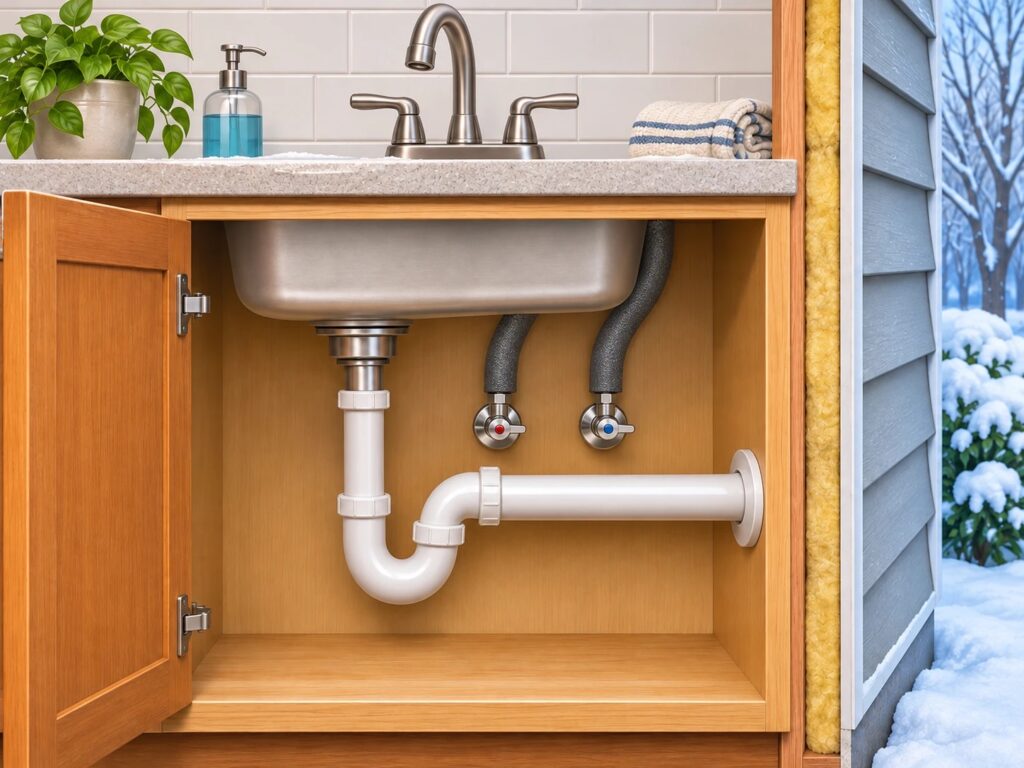
- Open the cabinet doors under kitchen and bathroom sinks so warm air reaches the pipes. Move cleaners out of children’s reach.
- Keep the garage door closed if water lines run through the garage.
- Outdoor spigots: disconnect and drain hoses, close the indoor valve that feeds each spigot, and leave the outside tap open so leftover water can expand.
- Going away? Leave the heat at 55°F or higher and have someone check the house daily, or drain the system and shut off the water, University of Illinois Extension says.
For the longer run, both guides suggest pipe insulation or UL-listed heat tape on pipes in unheated spaces. Even a quarter-inch of newspaper helps where hard freezes are rare, the Red Cross says.
If a pipe is already frozen
Only a trickle from a faucet is the sign. The Red Cross steps:
- Keep that faucet open. As the ice melts, running water helps melt the rest.
- Apply heat to the pipe: an electric heating pad wrapped around it, a hair dryer, a space heater kept away from anything flammable, or towels soaked in hot water.
- No open flame. No blowtorch, kerosene or propane heater, or charcoal stove.
- Keep going until full pressure is back, then check every other faucet. If one pipe froze, others may have, too.
- Call a licensed plumber if you can’t find the frozen spot, can’t reach it, or can’t thaw it.
If it bursts
Speed is everything. An eighth-of-an-inch crack can release up to 250 gallons of water a day, according to University of Illinois Extension.
- Shut off the water at the main valve. Find it now, before you need it, and show everyone in the house.
- Call a plumber and your insurance agent.
- Take photos of the damage before you clean up, for the claim.

When insurance pays
The National Association of Insurance Commissioners, the group of state insurance regulators, puts the rule simply:
- Homeowners policies cover damage from a “sudden and accidental” discharge from a plumbing system.
- Policies generally require you to keep the home at a minimum temperature, or to shut off the water if the home is vacant.
- If the insurer decides you neglected your plumbing by not taking steps to prevent freezing, the burst-pipe damage may not be covered.
| What happened | What regulators say to expect |
|---|---|
| Heat was on; a pipe froze and burst anyway | Water damage generally covered, as sudden and accidental |
| House left empty, heat off, water still on | Claim may be denied as neglect |
| House left empty, water shut off and lines drained | That’s the step policies generally ask for when a home is vacant |
Your own policy decides the details: the deductible, what counts as “vacant,” and any limit on mold. Read the water and freezing sections before winter, and call your state insurance department if a claim is denied.
The mold clock
Once the water stops, the EPA’s rule is to dry water-damaged areas and items within 24 to 48 hours. In most cases, mold won’t grow if things are dry by then.
- Small patch: if mold covers less than about 10 square feet (roughly 3 feet by 3 feet), the EPA says most people can clean it themselves.
- Bigger, or a lot of water: the EPA points to its remediation guide for larger jobs. If you hire a contractor, it says to pick one with mold experience, check references and ask them to follow that guide.
- Sewage or dirty water: call a professional who cleans up contaminated water damage.
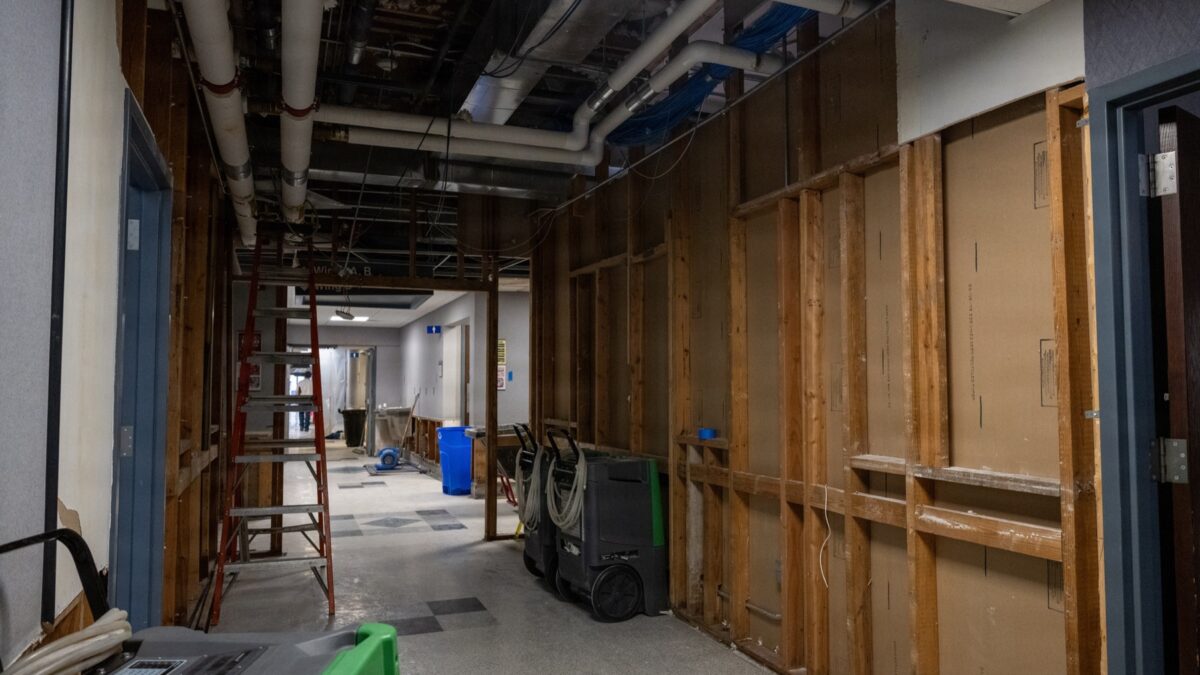
Mold can hide behind drywall, under carpet pads and above ceiling tiles, the EPA notes. The repairs in the photo at the top of this page included new drywall, ceiling tiles and flooring, plus mold prevention.
Keeping the heat on
Running the furnace harder costs money. Our winter heating cost calculator shows what this winter’s bill may run by fuel and state. If you’re behind on the bill, check your state’s cold weather rule, which can bar a utility from shutting off heat in winter.
Watch
 2:08
What we don't know yet
- An official outdoor temperature at which pipes freeze. The guides we checked give an indoor setting (55°F), not an outdoor threshold.
- Your own policy’s deductible, its definition of a vacant home and any limit on mold. They differ by insurer and state.
When any of this is confirmed, it goes into the page and the update history below.
Questions people ask
At what temperature do pipes freeze?
Water freezes at 32°F, so pipes in unheated spots (attics, crawl spaces, garages, outside walls) are at risk whenever those spaces get that cold. There’s no official outdoor number; the Red Cross and University of Illinois Extension say to keep the heat at 55°F or higher.
What does a Freeze Watch mean for my pipes?
A Freeze Watch means the National Weather Service sees a chance of widespread freezing temperatures in the next 24 to 36 hours; a Freeze Warning means below-32°F temperatures are forecast for a long period. Both are written for plants, but either is the night to protect pipes in unheated spaces and on outside walls.
Should I drip my faucets to keep pipes from freezing?
Yes, on very cold nights, for faucets served by exposed pipes. The Red Cross says running water through a pipe, even at a trickle, helps keep it from freezing.
What temperature should I keep my house to prevent frozen pipes?
No lower than 55°F, including when you’re away, according to the Red Cross. Keep it the same day and night during a cold snap.
How do I thaw a frozen pipe?
Keep the faucet open and heat the pipe with an electric heating pad, a hair dryer, a space heater kept away from flammable things, or hot, wet towels. Never use an open flame. Call a licensed plumber if you can’t find or reach the frozen spot.
Does homeowners insurance cover frozen pipes that burst?
Generally yes for the water damage, as a sudden and accidental discharge, according to the National Association of Insurance Commissioners. It may be denied if the insurer finds you didn’t take steps to prevent freezing, such as keeping the heat on or shutting off the water in a vacant home.
How fast does mold grow after a burst pipe?
The EPA says to dry water-damaged areas within 24 to 48 hours; in most cases mold won’t grow if they’re dry by then.